What Is Contract Bargaining? A Guide for New SHARE Members
Contract negotiations give SHARE members a key opportunity to have a say in the decisions that affect us at work. It’s been four years now since our last negotiations, and many have joined SHARE without ever having been in a union, or through a bargaining process before. This guide breaks it down in plain language, so we all know what's happening and why it matters.
Questions about negotiations or the SHARE contract? Contact your SHARE Rep or the SHARE office at (508) 929-4020 or share.comment@theshareunion.org.
-
Negotiations (or “bargaining”) is what we call it when we sit down with the hospital and hammer out the rules that govern our jobs. This covers everything from our pay to our health insurance to how discipline works. Our current contract doesn't last forever — it expires on a set date, and when it does, we have to negotiate a new one with the hospital. That process of give-and-take, meeting after meeting, is what we call bargaining.
In short: negotiating is how we and the hospital write the rulebook we work under.
-
Negotiating gives us a say in the decisions that affect us. Every part of our contract — our pay, our benefits, our time off, our job security — comes from negotiating. To achieve our goals, we’ve organized, shown up, and pushed at the bargaining table. Every time we've used bereavement time, filed a grievance, or gotten a raise, we were using something we bargained for.
In short: our contract is the result of negotiating, and negotiating is the reason we have the protections and benefits we rely on.
-
None of us sits across from the hospital alone, and no one person carries that weight on our behalf. Our bargaining team is made up of our elected Union Executive Board members — our co-workers, elected by us to represent our interests — alongside Organizers from the SHARE office who bring years of hands-on negotiating experience. That combination matters: our Executive Board members know what's happening on the floor, day to day, and many have experience from past negotiations. SHARE Organizers bring 30 years of relationship with UMass Memorial to the table, along with institutional memory and know-how to craft contract language that holds up.
In short: our bargaining team pairs elected member-leaders with experienced SHARE Organizers, so both real-world knowledge and negotiating skill are in the room.
-
We use an approach that is our own version of Interest-Based Bargaining, or IBB for short. Instead of both sides digging in and fighting over fixed positions, IBB asks everyone to explain the interests behind what they're asking for — the real problems they're trying to solve. From there, the two sides work together to find solutions that actually address those problems, rather than just trading demands back and forth. It takes more conversation up front, but it usually leads to agreements that make more sense, and hold up better over time, because both sides understand the "why," not just the "what."
In short: Interest-Based Bargaining means SHARE and the hospital focus on solving real problems together, not just trading demands.
-
SHARE members define for ourselves the negotiating priorities for our union. Union-wide surveys give us important data about what matters to members. SHARE leaders and representatives are continually talking with members about what’s important. Of course, the employer will bring issues to the table for us to consider, too.
Things that are important to all members – such as good raises and benefits – obviously become central to our negotiations. There’s not a specific limit on what can be negotiated, though, so whether you work overnights or across campuses, from a clinic or a nursing floor, an office or your home, our negotiating team pushes for improvements that matter to you in your work area.
In short: we listen for ideas that will make a difference to SHARE members, talk about the ideas to build consensus about our priorities, and advocate at the negotiating table for what’s important.
-
Here's something every member should know: raises don't happen automatically. SHARE has consistently won good raises, every year. However, not everyone who works in the hospital has. Raises are decided at the bargaining table, as part of the contract. SHARE’s negotiating team pushes for fair pay increases, and the hospital responds with its own position. Typically, the employer provides market data about hospital jobs, and SHARE provides justifications, too: economic analysis of what’s expected to happen with inflation and cost-of-living, individual stories about the experience of living on SHARE wages, members’ personal experience with local competing employers, and more. The two sides work it out until they land on numbers everyone can agree to. That agreement becomes part of our contract.
In short: our raises are negotiated, not given — they come directly out of the negotiating process.
-
SHARE’s Contract Agreement already provides many ways to address problems and create improvements. The many policies in our existing contract agreement have been developed and revised over many years. Most will stay the same.
That said, over the last four years, SHARE’s Team has gathered many ideas from SHARE members about how to use our negotiations to make things better at work. We’re establishing three dedicated “Side Tables” to discuss improvements in Problem Solving & Discipline, Artificial Intelligence, and the integration of other UMass Memorial groups if the hospital’s footprint continues to expand. Come to information meetings and keep your eye out for emails from SHARE to learn about what’s happening at the bargaining table.
It’s important to know that many policies defer to each department to establish its own standards; what works well in one area might not in another. Those departmental policies stay the same, too, unless SHARE members are engaged in a negotiating process to change them. (Those departmental conversations can happen any time, not just during contract negotiations.)
In short: Our contract already works well. Most of it won't change, except for some tweaks. SHARE has set up three special "Side Tables” to talk about making things even better. Watch for SHARE emails and info meetings to follow along, and remember that most department-specific rules stay the same unless members negotiate to change them, which can happen anytime.
-
Union contract agreements last for a certain amount of time – the length of the agreement is a thing we negotiate about, actually. Our current agreement is a four year contract; it expires on September 30, 2026. If we don’t reach a new agreement, we can extend our current contract to keep our policies in place while we finish up.
Although we aim to reach an agreement efficiently, our negotiations have often gone past the expiration in previous years, and it’s common to go a few weeks or months extra. (The MNA just went a full year beyond their expiration.) When we go beyond that deadline, SHARE negotiates for the raise during that time to be paid out as “retro,” so it doesn’t come out of the pay that members expect to get.
In short: SHARE can extend the existing agreement to keep protections in place while talks continue — this is common and has happened before. Any raises negotiated during that extra time will likely be paid out retroactively, so members don't lose pay they were expecting.
-
Striking can make a powerful statement about a union sticking together for their interests. Striking has powerful effects; it also comes with risks. (Also, to be clear, union members can’t legally strike while they have a contract agreement, only after it’s expired.)
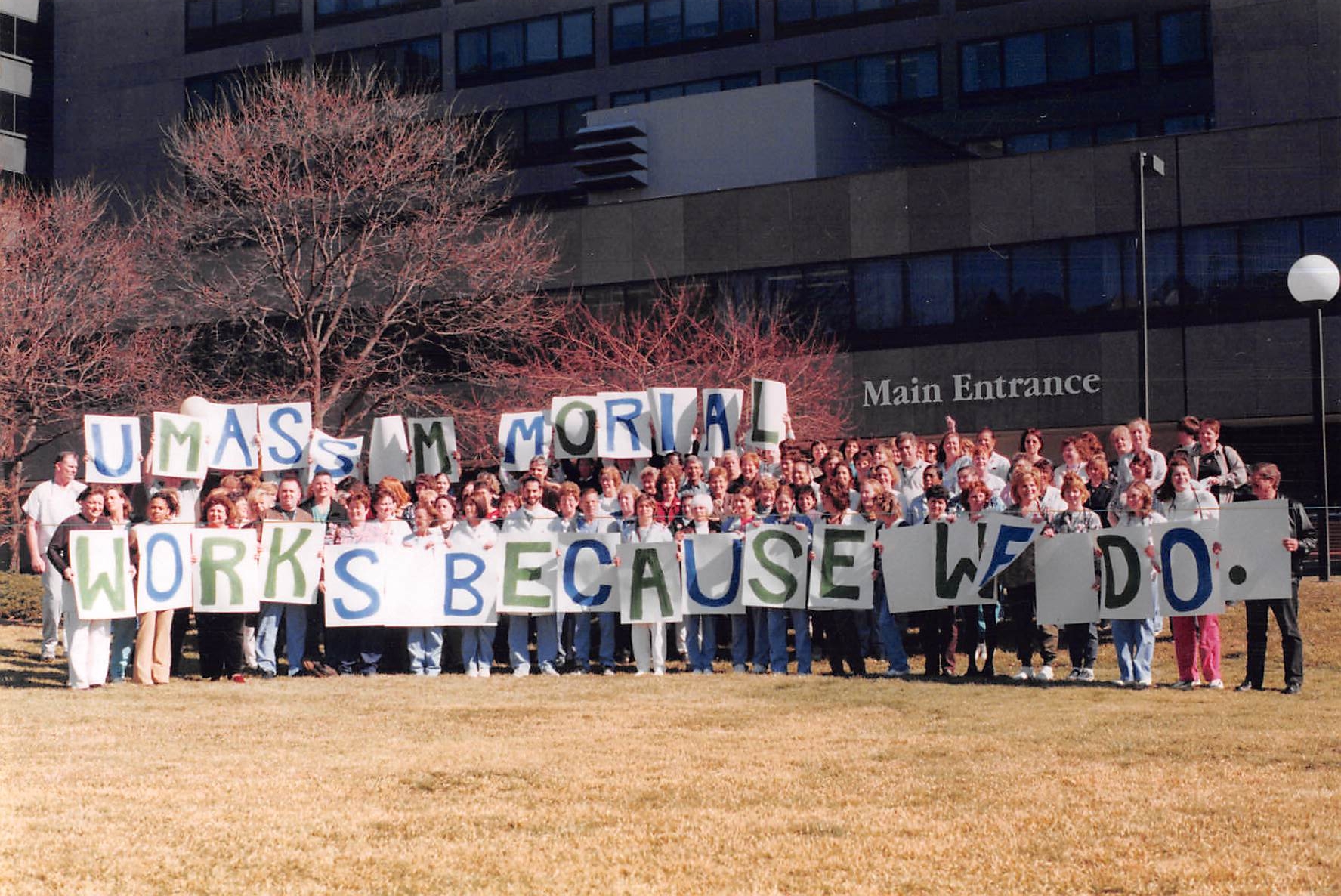
SHARE has never gone on strike. During past negotiations, SHARE members have, however, demonstrated how powerful it is to be standing together with thousands of other members – we’ve shown this through rallies, signature and photo posters, and many other creative ways, sometimes with chocolate, sometimes with singing.
In short: We’re here to take care of ourselves and our patients . . . and have a good time while we do it.
-
Some issues at the table are genuinely hard — the kind where two sides can see the same problem very differently. When that happens, we often bring in a professional facilitator to help guide the conversation. A facilitator doesn't take sides. Their job is to keep the discussion productive, make sure everyone is heard, and help both sides find their way to an agreement, even on the toughest issues.
In short: on the hardest issues, we bring in neutral, professional facilitators to help both sides reach agreement.
-
Once our negotiating team and the hospital agree on a new contract, it doesn't just take effect automatically. We get to see the proposed agreement and vote on whether to accept it. This is called ratification. Our vote is what makes the contract final — the negotiating team negotiates it, but we decide.
In short: after bargaining wraps up, we vote to ratify the contract, so the final say belongs to all of us.
-
You don't have to be on the Executive Board to have a voice in negotiations. SHARE regularly asks members for input on what issues matter most, and keeps members informed as negotiations move forward. Talk to your SHARE Rep, come to informational meetings, and keep your eyes peeled for email updates. We’ll also announce ways to participate and show your support for the negotiating team. The more members who get involved, the stronger SHARE's position is at the table.
In short: your voice can shape negotiations long before a vote happens — get involved early.